
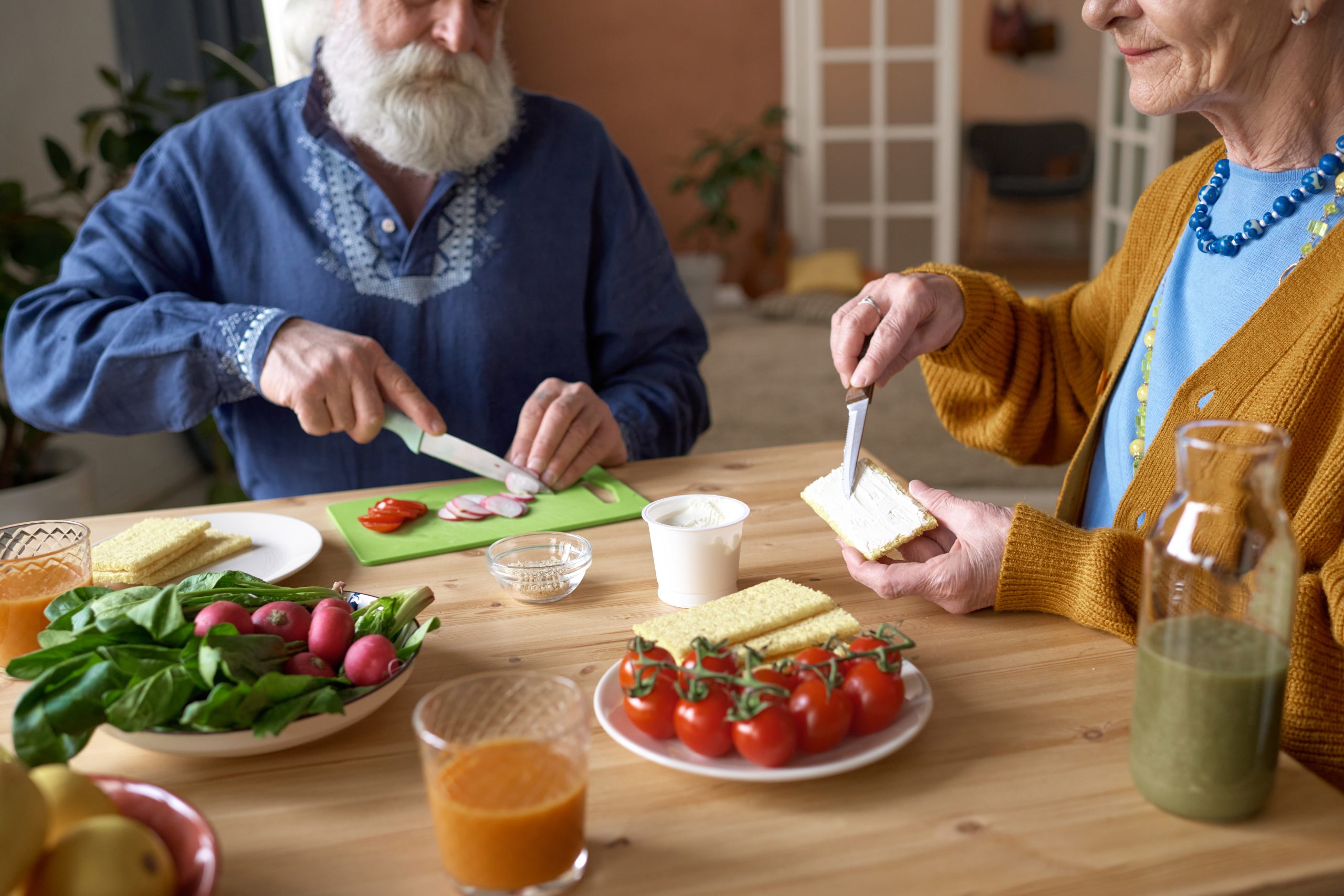
For adult children, spouses, and home caregivers supporting seniors at home, getting balanced nutrition on the table can feel like a daily struggle. Nutritional challenges in aging, lower appetite, dental or swallowing issues, medication side effects, fatigue, and tighter budgets, can turn meals into missed meals or repetitive choices that fall short. When nutrition slips, physical health often follows, with less strength, slower recovery, and higher risk of illness. Consistent, practical food choices also protect mental health by supporting energy, mood, and focus.
Quick Nutrition Takeaways for Caregivers
- Aim for balanced meals that include a variety of nutrient-rich foods each day.
- Support hydration by offering fluids regularly and watching for signs of dehydration.
- Use portion control to match appetite changes while still meeting daily nutrition needs.
- Increase fiber intake with food choices that support digestion and heart health.
- Prioritize bone-health nutrients and consider supplements only when a clinician recommends them.
Understanding Senior Nutrition Basics
Macronutrients are the body’s main fuel, like protein, carbs, and fats. Micronutrients are vitamins and minerals that support bones, blood, and immunity. Many older adults need fewer calories but still need essential nutrients, and absorption can be less efficient with age.
Hydration matters because even mild dehydration can worsen confusion, constipation, and dizziness. For caregivers, these shifts explain why a smaller appetite can still lead to weakness, slow healing, or frequent infections. Warning signs include sudden weight loss, low energy, dry mouth, dark urine, and fewer bowel movements.
Picture a parent who “eats like a bird” and sips little all day. They may feel full fast, miss key nutrients, and get lightheaded after standing. Small, nutrient-rich meals and steady fluids often make daily routines safer.
Build a Week of Balanced Meals in 7 Simple Moves
Balanced eating gets much easier when you plan for the basics you covered earlier: steady protein, fiber-rich carbs, healthy fats, key vitamins/minerals, and enough fluids. Use these simple moves to build a realistic week, without complicated cooking.
- Start with a “repeatable” weekly template: Pick 2 breakfasts, 2 lunches, and 3 dinners your loved one will actually eat, then repeat them weekly with small swaps (different fruit, different sauce, different vegetable). A simple template reduces decision fatigue and makes shopping cheaper because you buy the same core items. Many caregivers find that meal planning is helpful for saving time and cutting food waste, especially when there are dietary restrictions.
- Anchor every meal with easy lean protein: Protein supports muscle and healing, and many seniors fall short, especially earlier in the day. Aim for a protein at breakfast, lunch, and dinner using low-effort options: eggs, Greek yogurt, cottage cheese, canned tuna/salmon, rotisserie chicken, lentils, or tofu. A practical wake-up option is yogurt + fruit + nuts, or scrambled eggs on whole-grain toast.
- Use whole grains for “quiet” fiber and energy: Swap refined grains for whole grains most days: oatmeal instead of sugary cereal, brown rice or quinoa instead of white rice, whole-wheat pasta, and whole-grain bread. The benefit is steadier energy and better digestion, helpful when appetite is small but nutrition needs are high. Keep it affordable by buying store-brand oats, bulk rice, or frozen whole-grain blends.
- Build one “power snack” per day: If full meals feel like too much, add one nutrient-dense snack to protect calorie and protein intake. Examples: peanut butter on toast, hummus with crackers, cheese with fruit, or a small smoothie made with milk/yogurt and frozen berries. Safety tip: choose soft textures (banana, yogurt, applesauce, well-cooked oats) if chewing is difficult, and ask about swallow safety if coughing occurs with food or drinks.
- Cover calcium and vitamin D in two daily touches: Aim for two calcium-rich choices a day such as milk, yogurt, cheese, fortified plant milks, calcium-set tofu, or canned salmon with soft bones. Add vitamin D where you can with fortified milk/alternatives, eggs, or fatty fish; many people need extra vitamin D, but it’s best to confirm with a clinician before supplementing. If lactose is an issue, try lactose-free milk or yogurt, which is often tolerated better.
- Make hydration automatic, not optional: Dehydration can worsen fatigue, constipation, dizziness, and confusion, so set up simple cues. Keep a filled cup within reach, offer a drink with every medication dose and every snack, and include fluids that “count” like milk, herbal tea, broth, and hydrating fruits (melon, oranges). If frequent bathroom trips are a concern, shift more fluids earlier in the day and keep evening sips smaller.
- Shop and prep for “low-cook” wins: Choose affordable nutrient sources that require minimal work: frozen vegetables, bagged salad, canned beans, canned fish, and pre-cooked grains. Batch-cook just one item (a pot of lentils, a tray of chicken, or a big pot of soup) and reuse it in 2–3 meals to reduce fatigue for both caregiver and senior. Safety tip: refrigerate leftovers within 2 hours and reheat until steaming hot.
These habits create a steady nutrition “baseline,” making it easier to spot when appetite changes, restrictions tighten, or a supplement question needs a careful second look.
Nutrition Questions Caregivers Ask Most
Q: What are some affordable and practical strategies for seniors to maintain balanced nutrition daily?
A: Build meals around low-cost staples like eggs, beans, oats, frozen vegetables, and canned fish, then repeat favorites to reduce waste. If appetite is low, aim for “small but nourishing” with smoothies, yogurt, soups, or soft sandwiches. Watch for possible deficiency clues like unusual fatigue, mouth soreness, or slow wound healing, and ask a clinician before adding pills since nutrient deficiencies can vary by nutrient.
Q: How can seniors manage portion sizes effectively to prevent overeating and support healthy weight?
A: Use smaller plates or pre-portion snacks into bowls so serving size is decided before eating starts. Encourage a 10-minute pause, then check hunger again, especially if eating is triggered by boredom or stress. If diabetes or heart conditions are involved, confirm targets with a registered dietitian or clinician.
Q: What are the best ways to ensure seniors stay properly hydrated throughout the day?
A: Make fluids visible and easy: a favorite cup, a straw if helpful, and a drink offered with meds and between meals. Include hydrating options like broth, milk, herbal tea, and water-rich fruits, and shift most fluids earlier if nighttime trips are frustrating. Call a clinician promptly for sudden confusion, dizziness, or very dark urine.
Q: How can caregivers help seniors incorporate necessary nutrients like calcium and vitamin D to maintain bone health?
A: Add two “bone-support” touches daily such as yogurt, cheese, fortified milk alternatives, calcium-set tofu, or canned salmon with soft bones. Pair that with vitamin D foods like eggs or fatty fish, and ask about testing before starting supplements because dietary supplements are not medicines and can interact with prescriptions. If chewing is hard, choose softer textures like yogurt or tofu.
Q: How can busy caregivers adopt smarter daily choices to support both their own health and the nutrition needs of seniors they care for?
A: Simplify decisions: keep two quick breakfasts, one go-to lunch, and a short dinner rotation you can repeat without thinking. Stock “grab-and-go” basics that work for both of you, like fruit, nuts, pre-cut veggies, canned beans, and rotisserie chicken, and consider healthier lifestyle choices if you’re exploring simple ways to stay consistent. Protect your own energy with regular hydration, a protein-forward snack, and a short walk when possible.
Start a Simple Nutrition Routine That Supports Senior Health
Keeping a loved one eating well can feel like a daily puzzle, appetite shifts, restrictions, and safety worries all compete with busy schedules. The steadier path is a balanced lifestyle built on supportive eating habits and calm, informed decisions that make sustaining healthy nutrition more doable over time. When caregivers focus on consistency over perfection, meals become less stressful and senior health maintenance feels more manageable. Small, steady routines protect health more than occasional perfect meals. This week, you can choose one small change, such as sticking to a regular meal-and-snack rhythm or checking in on hydration, and keep it simple. That one step strengthens ongoing wellness and keeps nutritional care motivation rooted in stability and connection.